

 Facebook
 X
X
 Pinterest
 Copy Link
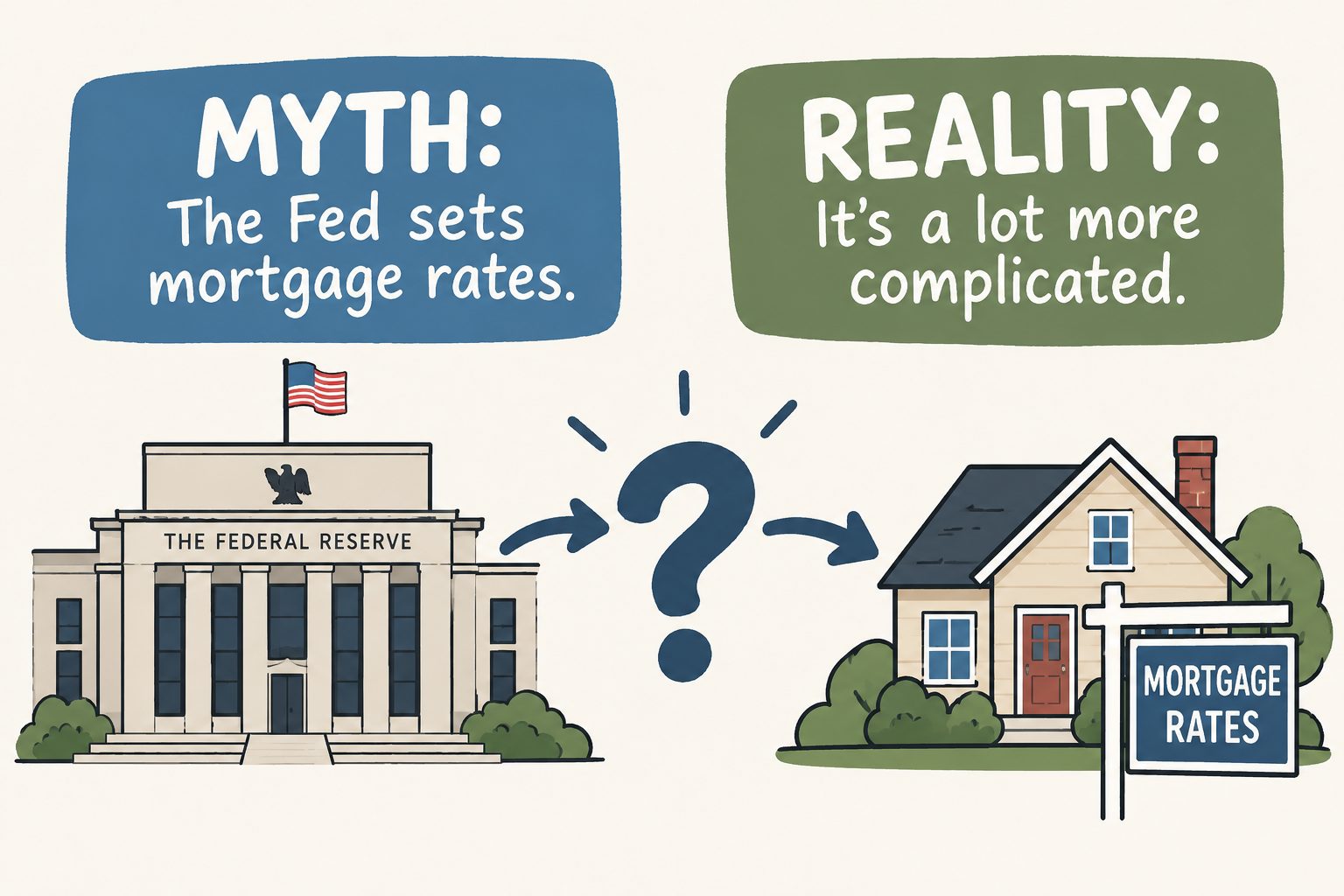
It sounds logical.
The Federal Reserve cuts interest rates, mortgage rates come down. The Fed raises rates, mortgage rates go up.
Except that’s not actually how it works.
This is one of the biggest misconceptions I hear when people talk about the housing market. And with every Federal Reserve meeting getting plenty of headlines, it’s easy to understand why buyers and sellers might think the Fed is directly controlling mortgage rates.
The reality is a little more complicated.
The Fed Doesn’t Set Mortgage Rates
When the Federal Reserve changes its benchmark federal funds rate, it’s adjusting the short term rate banks use when lending money to one another.
That can influence borrowing costs throughout the economy, including credit cards, auto loans, and home equity lines of credit.
But 30 year mortgage rates are different.
Mortgage rates are influenced much more by the bond market, inflation, economic conditions, employment data, and what investors believe is likely to happen with the economy in the months and years ahead.
That last part is especially important.
Financial markets are constantly looking forward. If investors already expect the Fed to cut rates, that expectation may already be reflected in mortgage rates before the Fed ever makes its announcement.
That’s why the Fed can cut rates and mortgage rates can stay relatively flat, or even move higher.
So What Should Buyers Be Watching?
For buyers in South Snohomish and North King Counties, the bigger takeaway is that waiting for the next Federal Reserve meeting isn’t necessarily a mortgage rate strategy.
Mortgage rates can change quickly based on new inflation reports, employment numbers, Treasury yields, and investor expectations.
They can move before the Fed acts.
They can move after the Fed acts.
And sometimes they can move in the opposite direction people expect.
Instead of trying to perfectly time interest rates, I’d rather see buyers focus on the things they can actually evaluate today.
Does the monthly payment work for your budget? Is the home a good fit? How much competition are you facing? Can we negotiate on price, closing costs, or an interest rate buydown?
Those are questions we can actually answer.
What Does This Mean for Sellers?
This matters for sellers too.
It can be tempting to hear that the Fed may cut rates and assume a wave of buyers is about to enter the market.
That isn’t guaranteed.
Buyer activity in our local market is influenced by mortgage rates, but also by inventory, home prices, seasonality, consumer confidence, and affordability.
A Fed announcement by itself doesn’t suddenly change all of those things.
That means the fundamentals still matter. Pricing the home correctly, preparing it well, and having a strong marketing strategy are far more important than trying to predict what the Federal Reserve will do next.
Don’t Try to Time the Fed
There’s nothing wrong with watching mortgage rates. A relatively small change in rate can make a meaningful difference in a monthly payment.
But there’s a big difference between watching rates and putting your entire real estate plan on hold while trying to predict them.
If you’re thinking about buying or selling in South Snohomish or North King County, the better question isn’t necessarily, “What is the Fed going to do?”
It’s, “What does today’s market mean for me?”
Thinking About a Move?
Whether you’re buying, selling, or trying to figure out if now is the right time, I’m happy to talk through the numbers and what we’re seeing locally.
Real estate decisions are personal, and the best strategy is the one that makes sense for your situation.

