Buyers and Sellers • August 12, 2026

Mortgage Rates Aren’t Falling Like Buyers Hoped. So What Now?

For the last few years, there has been one piece of advice floating around the housing market almost nonstop:

Just wait for mortgage rates to come down.

It sounds reasonable. After all, a lower mortgage rate means a lower monthly payment and more buying power.

But here we are in the second half of 2026, and mortgage rates haven’t exactly cooperated.

So maybe it’s time to ask a different question.

What if waiting for dramatically lower rates isn’t actually the best strategy?

Why Haven’t Mortgage Rates Fallen More?

The short answer is that mortgage rates aren’t controlled by any one person, bank, or even directly by the Federal Reserve.

They’re influenced by what’s happening throughout the economy, including inflation, the bond market, economic growth, and expectations about what comes next.

One factor that pushed mortgage rates unusually high over the past few years has already improved considerably. According to Keeping Current Matters, the gap between mortgage rates and the benchmark they tend to follow has moved much closer to its historical norm.

That’s good news, but it also means we may not have another huge drop in rates simply from things returning to normal.

Could mortgage rates still move lower? Absolutely.

But buyers waiting for a sudden return to 5% rates, or especially the 3% rates we saw several years ago, may be waiting for something that isn’t right around the corner.

Meanwhile, Something Else Has Changed

While everyone has been watching mortgage rates, the housing market itself has quietly become much friendlier to buyers.

That’s especially true here in the Seattle area and throughout Snohomish and North King counties.

There are more homes to choose from.

We’re seeing more price reductions.

Homes that might have received multiple offers immediately a few years ago are sometimes sitting for weeks.

And sellers are increasingly willing to have conversations about price, closing costs, repairs, and other terms.

That last part can be especially important when it comes to today’s mortgage rates.

Seller Credits Can Change the Payment

One of the opportunities I’m seeing in today’s market is buyers successfully negotiating seller credits that can be used toward their financing costs.

Depending on the loan, the transaction, and the amount of credit available, those funds may be used to buy down the buyer’s mortgage rate.

That can take a couple of different forms.

A permanent rate buydown uses money upfront to reduce the interest rate for the life of the loan.

A temporary buydown, such as a 2/1 buydown, can reduce the buyer’s rate for the first couple of years of homeownership before it returns to the full note rate.

Either way, it’s another reason the advertised mortgage rate doesn’t always tell the whole affordability story.

In a market where some sellers are more motivated and homes aren’t necessarily receiving multiple offers, negotiating several thousand dollars toward a buyer’s financing costs can sometimes make more sense than simply negotiating the same amount off the purchase price.

The goal isn’t just getting a house for less.

It’s finding the combination of price, financing, and terms that makes the monthly payment work.

A Lower Rate Doesn’t Automatically Mean a Better Deal

This is the part buyers sometimes overlook.

Imagine waiting for mortgage rates to fall significantly.

If that happens, you’re probably not going to be the only buyer who notices.

Lower rates could bring a lot of sidelined buyers back into the market at exactly the same time. Suddenly, the house that’s sitting today may have three, five, or ten interested buyers.

Negotiating leverage disappears pretty quickly when that happens.

Today, depending on the home, a buyer may be able to negotiate the purchase price, ask the seller to contribute toward closing costs or a rate buydown, negotiate repairs, or simply take the time to make a thoughtful decision without feeling like they have to race ten other buyers to the finish line.

That’s worth something.

The House Matters Too

There’s another problem with waiting for the “perfect” mortgage rate.

You aren’t just buying a rate.

You’re buying a house.

The right home, in the right neighborhood, at the right price may become available while rates are still higher than you’d prefer.

If the payment works within your budget and you’re able to negotiate favorable terms, passing on that home solely because you’re hoping rates will be substantially lower six months or a year from now can be a gamble.

Rates can change.

Your mortgage can potentially be refinanced later.

But you can’t refinance the purchase price of the house you didn’t buy.

Sellers Need To Pay Attention Too

This isn’t just a buyer conversation.

If you’re selling a home right now, today’s mortgage rate environment directly affects the people considering your property.

Buyers are payment conscious.

They’re comparing homes carefully.

And they have more choices than they did during the frenzy of a few years ago.

That means pricing correctly from the beginning matters.

Preparation matters.

Marketing matters.

And flexibility matters.

Sometimes that flexibility might mean accepting an offer with a seller credit that helps the buyer lower their interest rate rather than holding out for an offer with slightly better terms on paper.

I’ve seen good homes in good locations sit longer than agents and sellers expected this year. That doesn’t necessarily mean there’s something wrong with the home.

Sometimes it simply means today’s buyer has options and isn’t willing to overlook price or condition the way they might have when inventory was extremely limited.

Stop Trying To Time the Perfect Market

I don’t think buyers should rush out and purchase a home simply because mortgage rates might not fall.

And I certainly don’t think anyone should stretch their budget hoping they can refinance later.

But I also don’t think putting your life on hold waiting for a specific mortgage rate is much of a strategy.

The better question is whether today’s combination of home prices, mortgage rates, inventory, seller credits, negotiating opportunities, and your own financial situation creates an opportunity that makes sense for you.

Because the best housing market isn’t necessarily the one with the lowest mortgage rate.

Sometimes it’s the one where you actually have some leverage.

And right now, buyers have more of it than they’ve had in quite a while.

Buyers and Sellers • August 10, 2026

Weekly Market Update: August 3rd through August 9th

This Week’s Stats

New Listings: 209 ↑ (193 last week)
Pending Sales: 164 ↓ (195 last week)
Sold Homes: 123 ↓ (159 last week)
Price Reductions: 220 ↑ (206 last week)

Weekly Trend Overview

This week’s numbers tell a pretty clear late summer story.

New inventory ticked back up, with 209 new listings, an increase of about 8% from last week. At the same time, buyer activity cooled, with pending sales dropping from 195 to 164.

Closed sales also fell fairly sharply, down from 159 to 123. Closings tend to reflect contracts written several weeks earlier, so that number gives us another indication that the summer market has been moving at a slower pace.

The number that continues to stand out is price reductions. We had 220 reductions compared with 209 new listings this week. In other words, more sellers adjusted their price than new sellers entered the market.

What This Means for You

For Buyers:
There are opportunities right now. More homes are requiring price adjustments, competition isn’t nearly as intense across the board, and buyers may have more negotiating room than they did earlier in the year. The best homes can still move quickly, but buyers don’t necessarily have to approach every listing like it’s a multiple offer situation.

For Sellers:
The market is giving us a pretty strong reminder that pricing matters. With pending sales down and reductions up, buyers are being selective. Homes that are priced appropriately and show well can absolutely sell, but the market isn’t giving much grace to listings that start too high.

The takeaway: This isn’t a dead market. It’s a more selective one. Buyers have choices, and sellers have to compete for their attention.

Community • August 7, 2026

Community Spotlight: Mercer Island

Apparently August is luxury month around here.

After last week’s trip through Medina, we’re not exactly bringing the Community Spotlight back down to earth. This week we’re heading just across Lake Washington to Mercer Island, where waterfront estates, Midcentury Modern homes and multi-million-dollar price tags are very much part of the landscape.

But Mercer Island is more than just expensive real estate. With Seattle on one side, Bellevue on the other and Lake Washington surrounding it, the island offers a combination of location, outdoor recreation and community that’s pretty difficult to duplicate anywhere else in the region.

And yes, the real estate numbers are every bit as impressive as you’d expect.

Lifestyle

Mercer Island is home to roughly 26,000 people and manages to feel surprisingly removed from the surrounding metro area despite sitting almost exactly between Seattle and Bellevue.

That location has always been one of its biggest draws. I-90 provides direct access in both directions, while light rail has added another option for getting across the lake without getting behind the wheel.

Once you’re on the island, though, the feel changes considerably.

Mercer Island has nearly 500 acres of public parks and recreation areas. Luther Burbank Park offers waterfront access, trails and a boardwalk along Lake Washington, while Pioneer Park provides a large network of wooded trails right in the middle of the island. Aubrey Davis Park and the I-90 Trail add even more opportunities for walking, running and biking.

And naturally, when you live on an island in Lake Washington, boating is kind of a thing.

Public boat landings, beaches and waterfront parks are scattered around the island, while many of Mercer Island’s most valuable homes come with their own waterfront and docks.

Downtown Mercer Island gives residents a small commercial center with restaurants, coffee shops, fitness studios, local businesses and grocery shopping. It’s not trying to compete with downtown Bellevue or Seattle, and that’s probably part of the appeal. You can leave the island when you want the big-city experience and come back when you’re done.

The Mercer Island School District is another major reason families look here, with the district consistently receiving strong marks for its public schools.

The Mercer Island Housing Market

Okay, here comes the sticker shock.

Looking at closed residential sales over the past 12 months, the median sale price on Mercer Island was approximately $2.315 million, while the average sale price climbed to roughly $2.925 million.

Why such a big gap between the median and average?

Because Mercer Island has some seriously expensive homes at the upper end of the market. The most expensive sale in the data during this period reached $25 million.

But not every house on Mercer Island sells for $4 million or $5 million. Breaking the sales down by home style shows just how wide the range can be.

1 Story Homes

Median Sale Price: $1,690,000

These can represent some of the more approachable single-family options on the island, although “approachable” is obviously a relative term when we’re starting around $1.7 million.

Split Entry Homes

Median Sale Price: $1,850,000

Mercer Island has plenty of homes from the 1950s through the 1970s, so buyers will still find the split-level and split-entry architecture familiar throughout established neighborhoods.

1 Story Homes with Basements

Median Sale Price: $2,175,000

Add more finished space, larger lots, views or substantial updating and prices begin moving comfortably past the $2 million mark.

2 Story Homes

Median Sale Price: $2,785,000

This was one of the more active segments in the past year, and it’s also where you start seeing more of the larger traditional and newer luxury homes associated with Mercer Island.

2 Story Homes with Basements

Median Sale Price: $3,675,000

And now we’ve officially arrived at Mercer Island pricing.

These larger homes represented a significant portion of the upper end of the market, with waterfront, views, lot size, location and level of finish capable of pushing values dramatically higher.

Wait…Can You Live on Mercer Island for Under $1 Million?

Actually, yes.

Condos provide a completely different entry point into the Mercer Island market.

Over the same period, one-level condos had a median sale price of approximately $601,000, while two-level condos had a median around $680,000.

So if you’ve always wanted to casually drop “back on the island” into conversation but don’t happen to have $3 million lying around, there is technically another door in. 😆

Of course, condo ownership comes with its own considerations, including HOA dues, reserves, assessments and building condition, so the purchase price never tells the entire story.

Thinking About a Move?

Mercer Island is unquestionably one of the Seattle area’s premium real estate markets, but what makes it interesting is that there isn’t just one version of Mercer Island housing.

You’ll find older ramblers, classic Midcentury Modern architecture, condos near downtown, extensively remodeled homes, newer luxury construction and some truly spectacular Lake Washington waterfront estates.

The common thread is location.

Living minutes from both Seattle and Bellevue while still having wooded trails, beaches, parks and Lake Washington literally surrounding you is a combination very few communities can offer.

And if your budget happens to stretch into eight figures?

Well…Mercer Island can help you spend that too.

Question of the Week: If money were completely out of the equation, would you rather own a waterfront home on Mercer Island or a more private estate in Medina?

Buyers and Sellers • Sellers • August 5, 2026

Selling and Buying a Home at the Same Time? Start With a Plan

One of the most common questions I get from homeowners who are thinking about moving isn’t really about where they’re going.

It’s about how they’re going to get there.

“Do I sell my house first, or do I buy the next one first?”

And in our current market around Snohomish and North King County, that’s a very good question.

For years, homeowners became accustomed to hearing about homes selling in a weekend, multiple offers, waived contingencies, and buyers practically lining up at the door.

That’s not the market we’re in today.

There are still homes that sell quickly. But there are also perfectly good homes, in desirable areas, that are taking longer to find their buyer. That makes coordinating a sale and a purchase a little more complicated.

The good news?

You have options.

Step One: Figure Out What Your Current Home Is Really Worth

Before we start touring the dream house with the bigger kitchen, three-car garage, or the primary bedroom that doesn’t share a wall with the kids, we need to know what we’re working with.

That starts with your current home.

What would it realistically sell for in today’s market?

How much do you still owe?

What will your approximate proceeds be after the mortgage, selling expenses, and closing costs are paid?

That equity may become the down payment on your next home, and until we understand that number, we’re really just guessing at the rest of the move.

This is also where today’s market matters.

Across the Northwest MLS area, the number of homes for sale has increased considerably compared with last year. Buyers have more choices, and they’re being more selective.

That doesn’t mean your home won’t sell.

It means pricing and preparation matter.

A lot.

Step Two: Talk With a Lender Before You Decide Which Comes First

Once we have a realistic idea of your equity, the next conversation should be with a lender.

And preferably before you fall in love with another house.

Some homeowners have enough income, savings, or equity to purchase their next home before selling their current one. Others may have financing options that can help bridge the gap between the two transactions.

For other homeowners, the sale of their current home needs to happen first.

There’s nothing wrong with either scenario.

The important part is knowing which scenario applies to you before we’re standing in the kitchen of a house you absolutely have to have.

Option 1: Sell First, Then Buy

Financially, this is often the cleanest option.

Once your current home is under contract or sold, you know exactly how much money you’re bringing to the next purchase.

You’re also a much stronger buyer than someone whose offer depends entirely on selling a home that isn’t under contract yet.

The downside is obvious.

Where do you live in between?

Sometimes we can negotiate possession after closing. Sometimes the timing works beautifully and the two transactions close within days of each other.

And sometimes there’s a short-term rental, storage unit, and a few weeks of inconvenience involved.

Not glamorous, but sometimes it’s the smartest route.

Option 2: Buy First, Then Sell

This is certainly the more comfortable way to move if the finances work.

You can buy the new home, move at your own pace, and then prepare the old home for sale without trying to keep it spotless while you’re living there.

The catch?

You need to be able to financially carry both homes for some period of time.

And this is where I’d be particularly cautious in today’s market.

I would never want a homeowner making plans based on the assumption that their house will sell in seven days just because the house down the street did.

It might.

But we should build the plan around what happens if it doesn’t.

Option 3: Make the Purchase Contingent on Your Sale

Yes, contingent offers are a thing again.

For quite a while around Seattle and Snohomish County, an offer contingent on selling another home had about as much appeal to a seller as discovering water in the crawlspace.

The market has changed.

With more homes available and some properties sitting longer, sellers may be more willing to consider an offer that’s contingent on the buyer selling their current home.

That doesn’t mean every seller will accept one, particularly on a newly listed home receiving strong activity.

But it’s an option worth discussing, especially for homes that have been on the market for a while.

And right now, we’re seeing more of those.

Today’s Market Actually Creates Some Opportunities

Here’s the interesting part.

A slower market can make selling and buying at the same time feel more uncertain.

But it can also create opportunities.

If your current home takes longer to sell, the home you’re hoping to buy may be sitting longer too.

You may have more negotiating room.

You may be able to negotiate closing costs, repairs, price, possession dates, or other terms that would have been difficult a few years ago.

The key is understanding that your advantage as a buyer and your challenge as a seller are two sides of the same market.

That’s why I don’t look at the sale and the purchase as two separate transactions.

They’re one move.

Start With the Numbers, Not Zillow

If you’re thinking about selling and buying, you don’t need to have everything figured out before talking with an agent.

You don’t even need to know exactly where you’re going yet.

Start by answering a few questions:

What could my current home realistically sell for?

How much equity would I have available?

What can I comfortably spend on the next home?

Do I need to sell before I buy?

And what happens if the timing isn’t perfect?

Once we know those answers, we can build the strategy around them.

Because selling one home and buying another doesn’t have to feel like trying to jump from one moving train to another.

You just need to know which train is leaving first.


Buyers and Sellers • August 3, 2026

Weekly Market Update: July 27th through August 2nd

This Week’s Stats

New Listings: 193 ↓ (245 last week)
Pending Sales: 195 ↑ (194 last week)
Sold Homes: 159 ↑ (131 last week)
Price Reductions: 206 ↓ (218 last week)

Weekly Trend Overview

This week brought a pretty noticeable slowdown in new inventory, with just 193 new listings, down from 245 last week. At the same time, pending sales held steady and actually ticked up slightly to 195.

That means something interesting happened this week: more homes went pending than came on the market.

Closed sales also jumped to 159, while price reductions eased a bit to 206. Sellers are still making adjustments, but we did not see quite as many reductions as last week.

Overall, this looks less like buyers disappearing and more like the late summer inventory pipeline beginning to tighten.

What This Means for You

For Buyers:
There are still plenty of choices compared with the ultra competitive markets of years past, but this week’s drop in new listings is worth watching. Well priced homes are still getting attention, and with pending sales holding strong, waiting does not necessarily mean you’ll have more options later.

For Sellers:
Nearly 200 homes still went pending this week, so buyers are absolutely active. But with 206 price reductions, the market continues to make one thing clear: pricing and presentation matter. Buyers have choices, and they’re being selective.

The number I’m watching

193 new listings versus 195 pending sales.

That’s a small difference, but after several weeks where new inventory comfortably outpaced pending sales, it is an interesting shift heading into August.

Community • July 31, 2026

Community Spotlight: Medina

Years ago, when I worked in commercial pest control, I remember driving my work truck through Medina and getting some interesting looks from the locals. I joked that driving a pest control truck through Medina apparently attracts about as much attention as driving a McLaren through Downtown Everett.

That should give you some idea of where we’re headed with this week’s Community Spotlight.

Welcome to Medina, where a $2 million home is the affordable option.

Let’s acknowledge the obvious. Most of us probably aren’t casually scrolling through $10 million homes while deciding which one to buy this weekend. But who isn’t a little curious about what life and real estate look like in one of Washington’s most exclusive communities?

So, for this week’s Community Spotlight, we’re taking a peek behind the hedges.

Lifestyle: Privacy, Lake Washington and Some Very Famous Neighbors

Sitting along the eastern shore of Lake Washington between Bellevue and Seattle, Medina is a small residential community known for privacy, large properties, mature landscaping and some truly spectacular homes.

And when I say small, I mean it. Medina has only around 3,000 residents and just over 1,000 homes.

This isn’t a community built around a bustling downtown district. The appeal is almost the opposite. Quiet residential streets, heavily landscaped properties and relatively little through traffic give Medina a much more secluded feel than you’d expect considering Downtown Bellevue is only about two miles away and Downtown Seattle is less than ten miles away.

Of course, there’s also the lake.

Some of Medina’s most spectacular properties sit directly on Lake Washington, with private docks, sweeping views and the kind of outdoor spaces that make you wonder whether anyone actually goes inside their house.

Away from the waterfront, large lots and mature evergreen trees create another layer of privacy throughout the community. The median lot size is more than 16,000 square feet, which is increasingly unusual this close to the region’s major employment centers.

Residents also have access to places like Medina Park, Medina Beach Park and the trails and tennis courts at Fairweather Nature Preserve. Overlake Golf & Country Club, established in 1927, sits right in the community as well.

And yes, Medina has had some recognizable residents over the years. Bill Gates and Jeff Bezos have both owned property here.

So if you’ve ever wondered where the phrase “lifestyles of the rich and famous” applies locally, we’ve found it.

The Medina Real Estate Market

Okay. Here’s where things get fun.

I pulled recent Northwest Multiple Listing Service sales for Medina, and there were 41 closed sales in the data over the last 12 months.

The median sale price?

$4,925,000.

Not a typo.

The average sale price was even higher at approximately $5.37 million.

And here’s perhaps my favorite Medina statistic: the least expensive sale in the data was $1.92 million.

So yes, in Medina, a home selling for just under $2 million is apparently how you get your foot in the door.

At the other end of the spectrum, the highest closed sale in the data reached $11.55 million.

For perspective, the average single family home in Medina is nearly 3,800 square feet. But size alone doesn’t explain these prices. You’re buying location, land, privacy and, in some cases, Lake Washington waterfront.

And waterfront takes things to another level.

Among the waterfront sales in my MLS data, the median sale price was approximately $7.51 million.

Apparently the lake view isn’t included in the base model.

But Even Medina Homes Don’t Automatically Sell

This may actually be the most interesting part of Medina’s current market.

Homes.com currently reports roughly 9.8 months of housing supply and an average market time of about 56 days.

That’s a good reminder that expensive doesn’t automatically mean competitive.

At this level of the market, the buyer pool becomes dramatically smaller. A beautiful $5 million home can still sit. A $10 million property can still need the right pricing and marketing strategy. And when you’re dealing with highly unique properties, finding the right buyer can simply take time.

There’s also some serious inventory competing for attention right now.

Current Medina offerings include homes around $3 million, $6 million, $10 million, $15 million and beyond. One current waterfront estate is offered at $24.5 million.

So if you’ve been waiting for interest rates to drop before jumping into that $24.5 million lakefront estate, I completely understand. 😆

Thinking About a Move?

Medina obviously represents a tiny and very specialized slice of our regional housing market.

But that’s part of what makes looking at different communities so interesting.

Within a relatively short drive around the Puget Sound region, we can go from rural acreage and starter homes to suburban neighborhoods, waterfront communities, downtown condos and, occasionally, a place where the median home sale is approaching $5 million.

Real estate is incredibly local.

And while Medina probably isn’t making everyone’s weekend home tour list, it’s still fun to peek through the gates every once in a while.

If you are thinking about buying or selling anywhere around the Puget Sound region, I’m always happy to help you understand what the numbers actually look like in your market.

Question of the Week

If money were absolutely no object, would you rather have a massive Medina estate tucked behind the trees or a Lake Washington waterfront home with your own private dock?

I’m taking the dock.

Buyers • Sellers • July 29, 2026

Why Are Some Great Homes Sitting on the Market?

Over the past few weeks, I’ve found myself asking a question I honestly didn’t expect to be asking this summer.

Why are some really good homes just… sitting?

Not overpriced homes.

Not homes with terrible photos.

Not homes in undesirable neighborhoods.

I’m talking about homes that are thoughtfully prepared, professionally marketed, priced where multiple experienced agents agree they should be, and located in communities people genuinely want to live in.

Yet they’re not getting the activity we would have expected even a year ago.

What’s interesting is that another home just a few miles away might receive multiple offers in its first weekend.

So what’s going on?

Buyers Have More Choices

The first piece of the puzzle is inventory.

Compared to the past few years, buyers have more homes to choose from. That’s a good thing for anyone shopping for a home, but it also means every listing has more competition.

When buyers had only a handful of options, they were often willing to compromise.

Today, they don’t have to.

If one home doesn’t feel quite right, another one will likely be available next week.

Buyers Are Taking Their Time

I’ve also noticed buyers are making decisions differently.

A few years ago, buyers often felt they had to make an offer within hours or risk losing the home.

Today, many are taking a second look. They’re comparing homes, thinking through the financial commitment, and asking more questions before writing an offer.

That’s not necessarily hesitation. It’s simply a more balanced market than we’ve experienced in quite some time.

There Isn’t Always a Perfect Explanation

This is probably the biggest lesson I’ve learned recently.

Sometimes there simply isn’t a perfect reason.

I’ve watched homes I thought would sell the first weekend stay on the market longer than expected.

I’ve also watched other homes receive multiple offers almost immediately when I thought they’d take a few weeks.

If someone has discovered the exact formula that predicts which home sells in three days and which one takes thirty, I’d love to hear it.

Real estate has always involved people making emotional decisions, and people don’t always behave predictably.

A Slower Start Doesn’t Mean Something Is Wrong

One thing I’d caution sellers against is assuming that a home sitting for a few weeks automatically means something is wrong.

Could pricing be a factor? Sometimes.

Could presentation matter? Absolutely.

But sometimes a home simply needs to find the right buyer.

Patience has quietly become part of today’s market again.

That’s something we haven’t had to talk about much over the past several years.

What This Means for Buyers

If you’re buying, this market offers something we haven’t seen in a while.

More choices.

A little more breathing room.

The opportunity to compare homes instead of feeling pressured to make an immediate decision.

That doesn’t mean every home will be negotiable, but it does mean buyers have more opportunities to find the right fit.

What This Means for Sellers

If you’re selling, today’s market requires a different mindset than it did a few years ago.

Success isn’t measured by whether your home receives five offers in one weekend.

It’s measured by attracting the right buyer at the right price.

That may happen in three days.

It may take three weeks.

Or somewhere in between.

Every home has its own story.

Final Thoughts

If there’s one thing this summer has reminded me, it’s that real estate doesn’t always fit neatly into a headline.

The market isn’t crashing.

It’s not booming either.

It’s simply behaving more like a market where buyers have choices, sellers need patience, and every home deserves to be evaluated on its own merits.

As frustrating as that can sometimes be, it’s also a healthier and more balanced environment than we’ve experienced in quite a while.

If you’re wondering what this market means for your home or your plans to buy, I’d be happy to have a conversation. Every situation is different, and that’s exactly why local advice matters.

Buyers and Sellers • July 27, 2026

Weekly Market Update: July 20th through July 26th

This Week’s Stats

🏡 New Listings: 245 ⬆️ (228 last week | +17)

🤝 Pending Sales: 194 ⬆️ (189 last week | +5)

🔑 Sold Homes: 131 ⬇️ (142 last week | -11)

💲 Price Reductions: 218 ⬇️ (245 last week | -27)

Weekly Trend Overview

Inventory continued to build this week as new listings increased for the second straight week. Pending sales also ticked higher, showing that buyers are still active despite the middle of summer. Closed sales slipped slightly, which is expected since they reflect contracts written several weeks ago. Price reductions fell noticeably, suggesting sellers may be pricing more accurately or choosing to hold steady rather than making immediate adjustments.

Overall, the market remains balanced with buyers continuing to make moves while fresh inventory gives them more choices.

What This Means for You

For Buyers

More new listings mean more opportunities to find the right home without feeling rushed. Homes that are priced well are still attracting offers, but buyers continue to have more negotiating power than they did earlier this year.

For Sellers

Demand is still there, but presentation and pricing matter more than ever. Buyers have options, so homes that are prepared well and priced competitively continue to stand out and sell more quickly.

If you’re wondering what these trends mean for your neighborhood or your home’s value, I’d be happy to help.

Community • July 24, 2026

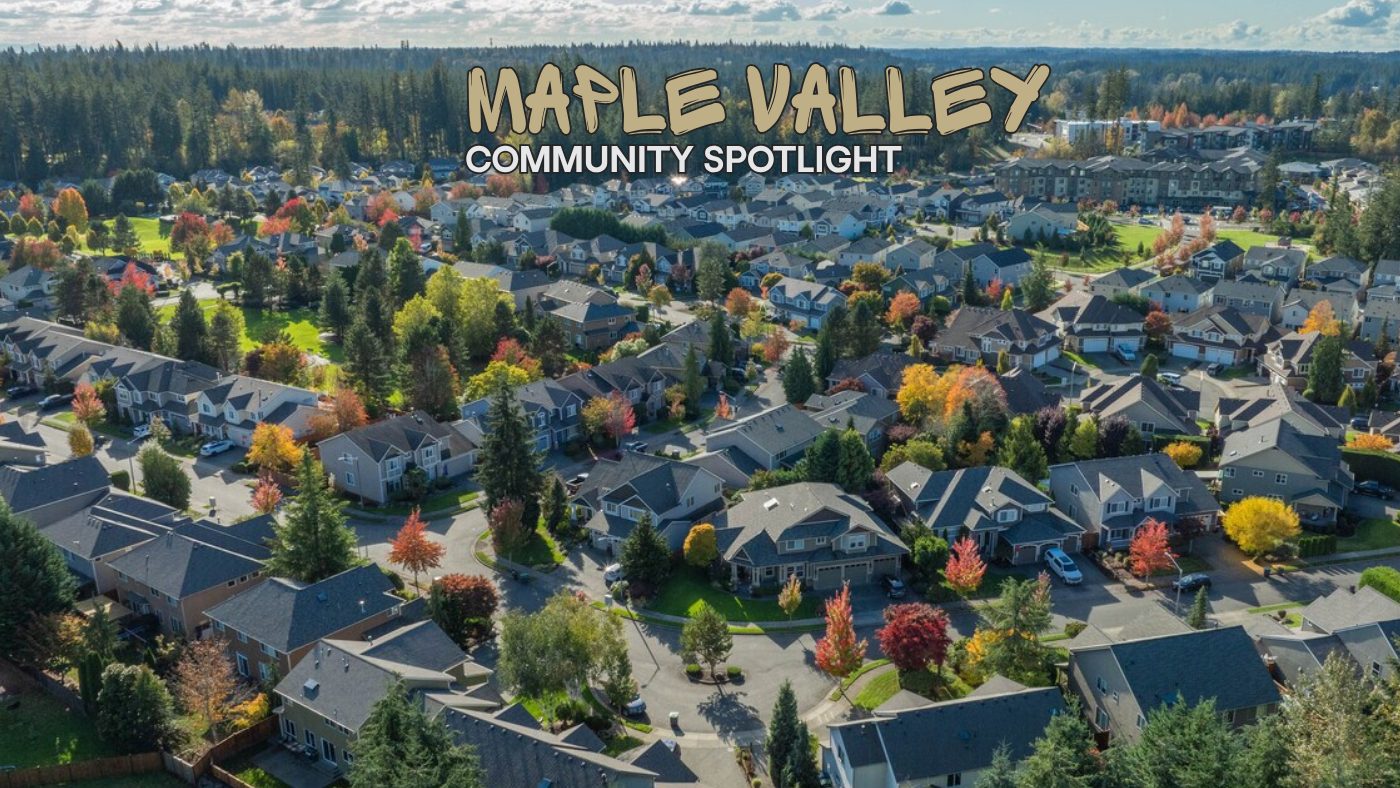
Community Spotlight: Maple Valley, Washington

Discover Maple Valley: Small Town Feel, Big Outdoor Lifestyle

If you’re looking for a community that blends natural beauty with modern conveniences, Maple Valley deserves a closer look. Located about 30 miles southeast of Seattle, Maple Valley has become one of the fastest growing communities in King County while still holding onto its small town atmosphere.

Outdoor recreation is a huge part of life here. Residents enjoy easy access to Lake Wilderness Park, Cedar River Trail, nearby hiking, fishing, kayaking, and countless neighborhood parks. Families appreciate the highly rated Tahoma School District, while commuters benefit from access to Highway 18, Highway 169, and nearby employment centers.

Shopping, restaurants, breweries, coffee shops, and community events continue to expand, making Maple Valley an increasingly popular destination for buyers looking for more space without giving up everyday conveniences.

Maple Valley Market Snapshot, 12 month span

Single Family Homes

  • 372 homes sold
  • 112 active listings
  • Median sold price: $775,000
  • Average Days on Market: 35 days

Inventory has improved compared to recent years, giving buyers more choices while well prepared homes continue to attract strong interest.

Townhomes

  • 23 homes sold
  • 2 active listings
  • Median sold price: $500,000
  • Average Days on Market: 44 days

Townhomes remain a limited segment of the market, making new listings worth watching for buyers looking for affordability.

Condominiums

  • 11 homes sold
  • 4 active listings
  • Median sold price: $492,500
  • Average Days on Market: 62 days

Condo inventory is still relatively small, but can provide an excellent entry point into the Maple Valley market.

Why Buyers Love Maple Valley

Maple Valley continues to attract buyers because it offers:

  • Beautiful parks and outdoor recreation
  • Excellent schools
  • Larger lots than many neighboring communities
  • A strong sense of community
  • Convenient access to Seattle, Bellevue, Renton, and Kent
  • Growing retail and dining options

It’s easy to see why many homeowners move here and stay for years.

Thinking About Buying or Selling?

Whether you’re considering making Maple Valley your next home or wondering what your current property is worth, I’d be happy to help you understand today’s market and create a strategy that’s right for you.

Question of the Week

If you could choose, would you rather have a larger backyard or be within walking distance of shops and restaurants? Why?

Buyers • July 22, 2026

The Summer Market Has Changed. Buyers Finally Have Room to Think.

If you’ve been waiting for the “perfect” time to buy a home, you’re probably realizing there never really is one.

Interest rates change.

Prices move.

Inventory rises and falls.

The market is always evolving.

But something has shifted over the past several weeks that buyers haven’t enjoyed in quite some time.

They finally have room to think.

More Choices Mean Better Opportunities

Not long ago, buyers often felt like they had to make a decision almost immediately.

A new listing would hit the market on Thursday.

Showings filled up by Friday.

Offers were due by Monday.

If you wanted the home, there wasn’t much time to compare it with anything else.

Today’s market feels different.

Inventory has grown, giving buyers more homes to choose from. That doesn’t mean every home is sitting on the market, but it does mean buyers are less likely to feel pressured into making an instant decision.

Having options is a good thing.

You can compare neighborhoods, layouts, commute times, and overall value before writing an offer.

That’s a much healthier market than one driven by urgency alone.

Negotiation Is Back

One of the biggest changes this summer is that negotiations are part of the conversation again.

That doesn’t mean every seller is cutting their price.

Well prepared, well priced homes are still selling quickly.

But buyers are beginning to see opportunities they simply didn’t have a year or two ago.

Price reductions are becoming more common.

Some sellers are offering credits toward closing costs.

Inspection requests are receiving more consideration.

Instead of feeling like they have to accept every term, buyers are finding room for real conversations.

What We’re Seeing Locally

Here in South Snohomish County and North King County, we’re seeing many of the same trends.

Inventory has increased.

Homes are taking a little longer to sell than they did during the peak of the spring market.

Buyers have more choices than they’ve had in quite some time.

That doesn’t mean it’s suddenly a buyer’s market.

Well maintained, move in ready homes that are priced correctly continue to attract strong interest.

The difference is that buyers can be more selective. They’re taking the time to compare homes instead of rushing into the first one they see.

Sellers Shouldn’t Panic

If you’re thinking about selling, none of this means you’ve missed your opportunity.

It simply means preparation matters more than ever.

Pricing your home correctly from the beginning, presenting it well, and making a great first impression are becoming even more important as buyers have more options.

The homes that stand out are still selling.

Thinking About Buying?

If you’ve been sitting on the sidelines waiting for things to calm down, this summer may be worth another look.

You may not find dramatically lower prices, but you could find something just as valuable.

More choices.

More flexibility.

And a little more time to make one of the biggest financial decisions of your life.

Sometimes that’s exactly the opportunity buyers have been waiting for.


Question of the Week

If you were buying a home today, would you rather have more choices or lower interest rates? I’d love to hear which matters more to you.