New Listings: 188 ⬆️ (156 last week) Pending Sales: 193 ⬆️ (175 last week) Homes Sold: 122 ⬇️ (150 last week) Price Reductions: 115 ⬆️ (111 last week)
Weekly Trend Overview
The spring market is clearly gaining momentum across South Snohomish and North King County. New listings jumped significantly this week, giving buyers more options than we’ve seen in several weeks. At the same time, pending sales also climbed, showing that buyer demand remains strong as we move further into the early spring market.
Closed sales dipped slightly, which is fairly normal since closings typically lag behind pending activity by several weeks. With pending sales increasing again this week, we should expect sold numbers to rebound soon.
Price reductions also ticked up slightly. This is a typical signal that some sellers may have started slightly ahead of the market and are adjusting to meet buyer expectations.
Overall, the market is becoming more active on both sides as we head deeper into the spring buying season.
What This Means for You
Buyers
Inventory is starting to improve, which gives you more choices compared to earlier this year. However, the increase in pending sales shows that competition is still very real for well priced homes.
If you are planning to buy this spring, preparation is key. Having financing ready and being able to move quickly when the right home hits the market can make a big difference.
Sellers
More listings are hitting the market, which means competition between sellers is increasing. The good news is that buyer activity remains strong, as shown by the rise in pending sales.
Proper pricing and strong presentation are becoming more important as the number of homes for sale grows. Homes that are positioned well are still attracting serious buyer interest.
If you’re curious how these trends affect your home’s value or your plans to buy or sell this year, I’m always happy to help.
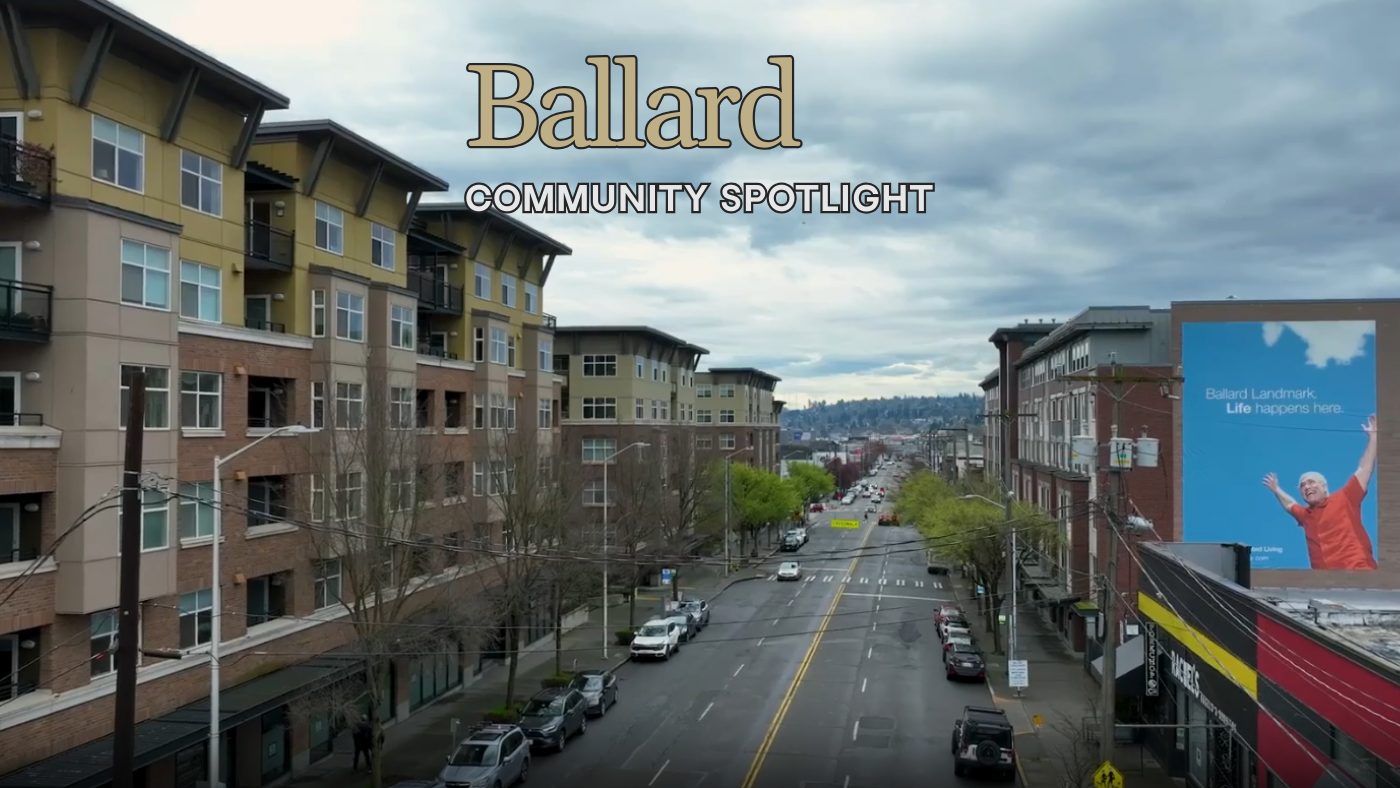
Ballard continues to be one of Seattle’s most recognizable and vibrant neighborhoods. With its Scandinavian roots, walkable core, waterfront access, and a mix of modern condos and classic Craftsman homes, it offers a lifestyle that is hard to replicate anywhere else in the city.
Here is a quick look at the numbers:
Residential Homes Average Sales Price: $975k
Condos Average Sales Price: just over $670k
That gap between condos and single family homes creates opportunity depending on your goals. If you want lower maintenance living close to shops, restaurants, and nightlife, the condo market in Ballard provides strong access at a more approachable price point. If you are looking for yard space, long term appreciation potential, and more privacy, single family homes continue to command a premium.
Why Buyers Love Ballard
• Walkability to Ballard Avenue, restaurants, breweries, and shops • Easy access to waterfront parks and the Ballard Locks • Strong sense of community and neighborhood identity • Mix of historic charm and modern construction
What This Means for Sellers
Ballard remains highly desirable. Buyers often prioritize location over size here, and lifestyle plays a major role in decision making. Pricing correctly is key, especially as buyers compare condo affordability versus stretching for a detached home.
If you are curious what your Ballard home or condo could sell for in today’s market, let’s run the numbers.
If you’re renting in Lynnwood, Bothell, Mill Creek, Edmonds, Shoreline, or nearby, you’ve probably wondered:
Should I just keep renting… or is it time to buy?
With interest rates higher than they were a few years ago, many renters assume buying no longer makes sense.
But locally, the gap between renting and owning is often smaller than people think.
What Renting Looks Like Right Now
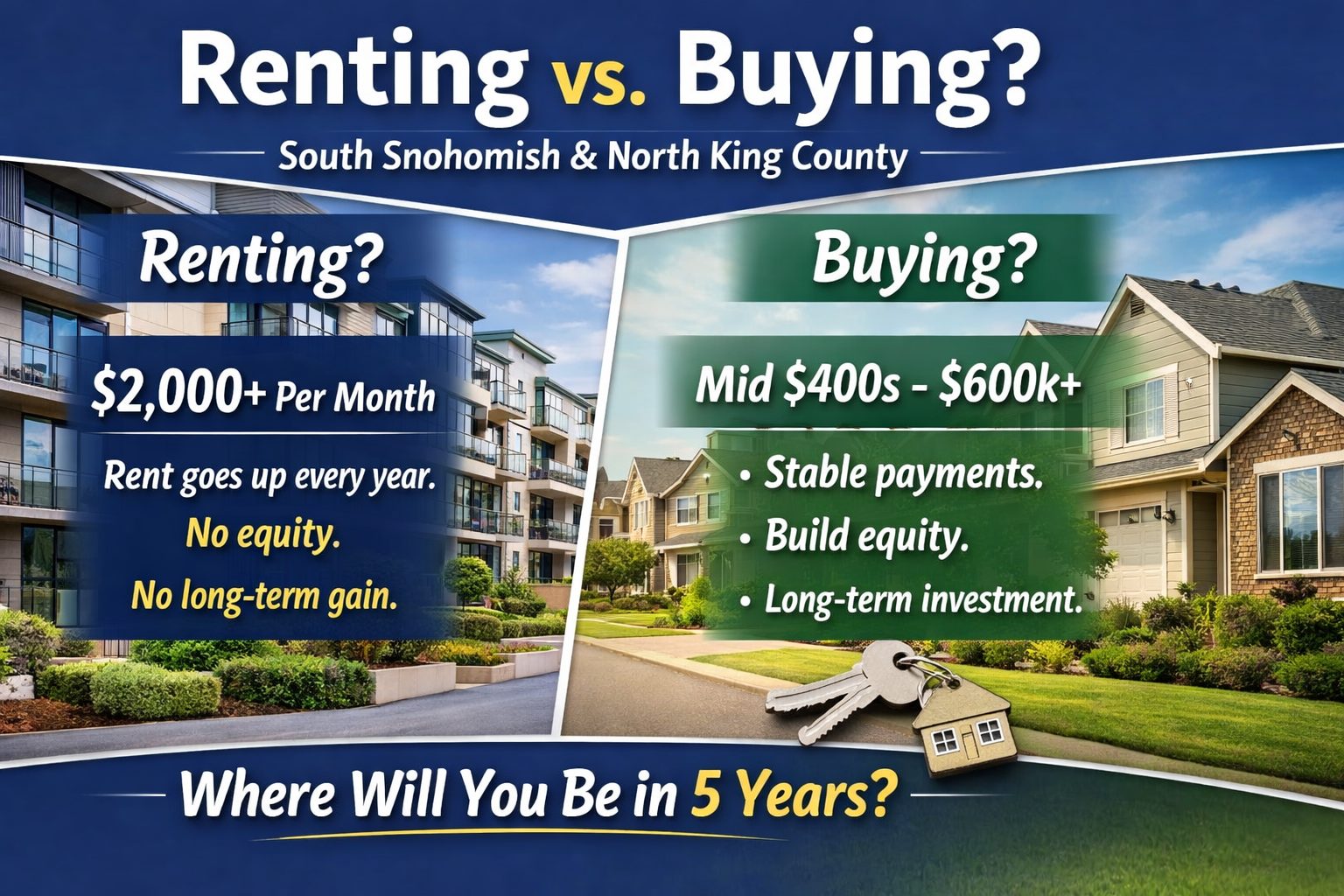
A solid 1 bedroom apartment in our area can run close to $2,000 per month.
2 bedrooms regularly push well beyond that.
Townhome style rentals can climb into the $3,000 range without much effort.
And most leases reset every 12 months.
So the real question is not just what rent costs today. It’s what you’ll be paying 3 to 5 years from now.
What Buying Looks Like Here
In South Snohomish and North King County, there are real entry points into ownership.
Townhomes can often be found in the mid $400s. Single family homes can start around $600k and up depending on location and condition.
Yes, ownership comes with responsibility. There’s maintenance. There are property taxes. There’s insurance.
But there are also things renters do not get:
You lock in your principal and interest payment. You build equity with every payment. You participate in long term appreciation in a region that continues to see strong demand.
Ownership is not just about the monthly payment. It’s about where that payment positions you 5 years from now.
The 5 Year Question
If you rent for 5 more years at $2,700 per month, that’s over $160,000 paid out.
If you own for 5 years, a portion of each payment reduces your loan balance. And if values rise even modestly over that time, that appreciation compounds your position.
You are not just paying for housing. You are building something.
But What About Rates?
This is the hesitation I hear most.
Yes, rates are higher than the ultra low years.
If rates improve in the future, refinancing is an option. If rent increases, there is no refinance.
When Renting Still Makes Sense
Buying is not right for everyone.
Renting can be smart if:
You plan to move within 1 to 2 years. You need maximum flexibility. You are still building credit or saving for a down payment.
But if you plan to stay in the area for several years, the financial conversation starts to shift.
What This Means for You Locally
South Snohomish and North King County continue to see strong demand because of location, access to major job centers, and overall quality of life.
Inventory remains competitive in well priced homes.
That means trying to perfectly time the market rarely works. Building a long term strategy does.
The key is not guessing.
It’s running your numbers.
Want to See What This Looks Like for You?
If you’re renting locally and wondering whether buying could make sense, let’s look at your situation.
We can review:
What you’re paying now What ownership might look like What down payment options exist Whether waiting or moving forward makes more sense
Sometimes the answer is wait.
Sometimes the answer is you’re closer than you think.
Here’s what we saw across South Snohomish and North King County this week:
This Week’s Stats
New Listings: 156 ⬇️ from 168 Pending: 175 ⬆️ from 165 Sold: 150 ⬆️ from 112 Price Reductions: 111 ⬆️ from 54
Weekly Trend Overview
New listings dipped slightly, but buyer activity picked up in a big way. Pending sales increased and closed sales jumped significantly week over week. The most notable shift was in price reductions, which more than doubled compared to last week.
That tells us two things at the same time: buyers are active and motivated, but they are also price sensitive. Homes that are positioned well are moving. Homes that overshoot the market are adjusting quickly.
What This Means for You
Buyers
More homes are closing and pendings are strong, which means competition is still out there. However, the spike in price reductions is creating opportunity. If a home has been sitting or just reduced, there may be room for stronger terms or negotiations.
This is a market where strategy matters. Knowing which homes are likely to move quickly and which ones are overpriced can make a big difference.
Sellers
Buyers are absolutely in the market. One hundred fifty homes closed this week alone. That is a strong number.
But pricing right out of the gate is critical. With 111 reductions in just one week, the market is clearly correcting homes that missed the mark. The first 7 to 10 days on market are still the most important window.
If you’re thinking about making a move this spring, this is the time to start preparing. Positioning and presentation are everything right now.
If you want to know how your specific neighborhood is performing, or what your home might realistically sell for in today’s market, let’s connect.
Lake City is one of North Seattle’s most underrated neighborhoods. It offers an approachable price point compared to many surrounding areas, while still giving you quick access to downtown Seattle, the Eastside, and outdoor recreation.
If you are looking for a mix of established residential streets, condos with convenience, and long term upside, Lake City deserves a closer look.
Lake City Real Estate Snapshot
Residential Homes Average sold price: just under $985,000
Condos Average sold price: just over $560,000
When you compare that to other North Seattle neighborhoods pushing well past the million dollar mark for single family homes, Lake City stands out as a more attainable entry point while still being within the Seattle city limits.
For buyers who feel priced out of nearby areas, this is often where we start the conversation.
What Makes Lake City Appealing?
1. Strong Value Within Seattle
You are still in Seattle proper, but the price per square foot often stretches further here than in places like Green Lake or Wallingford.
2. Accessibility
Lake City Way NE provides a direct corridor south toward downtown and north toward I-5 and 522. You are also within reasonable distance to:
Northgate Station
University of Washington
Lake Washington
3. Rental and Investment Potential
Because of its location and relative affordability, Lake City often attracts first time buyers and investors. Condos around the mid $500s can create opportunities for those wanting to stay in the city without crossing the $700k to $800k range.
Who Is Lake City a Good Fit For?
Lake City can be a strong match for:
• Buyers who want a Seattle address under the million dollar mark • Condo buyers who want more space for their money • Investors looking for long term appreciation in a city location • Move up buyers who want proximity to both Seattle and the Eastside
Market Positioning
With residential averages just under $985k and condos just over $560k, Lake City sits in a strategic middle ground. It is not the lowest price point in King County, but within Seattle city limits, it offers one of the more balanced combinations of price and accessibility.
For sellers, this means buyers are often value driven and comparison shopping heavily across neighborhoods. Pricing and presentation matter.
For buyers, it means opportunity still exists here compared to some neighboring areas that have already surged.
If you are curious what your Lake City home is worth, or you want to explore what is currently available in the neighborhood, I would be happy to put together a custom breakdown.
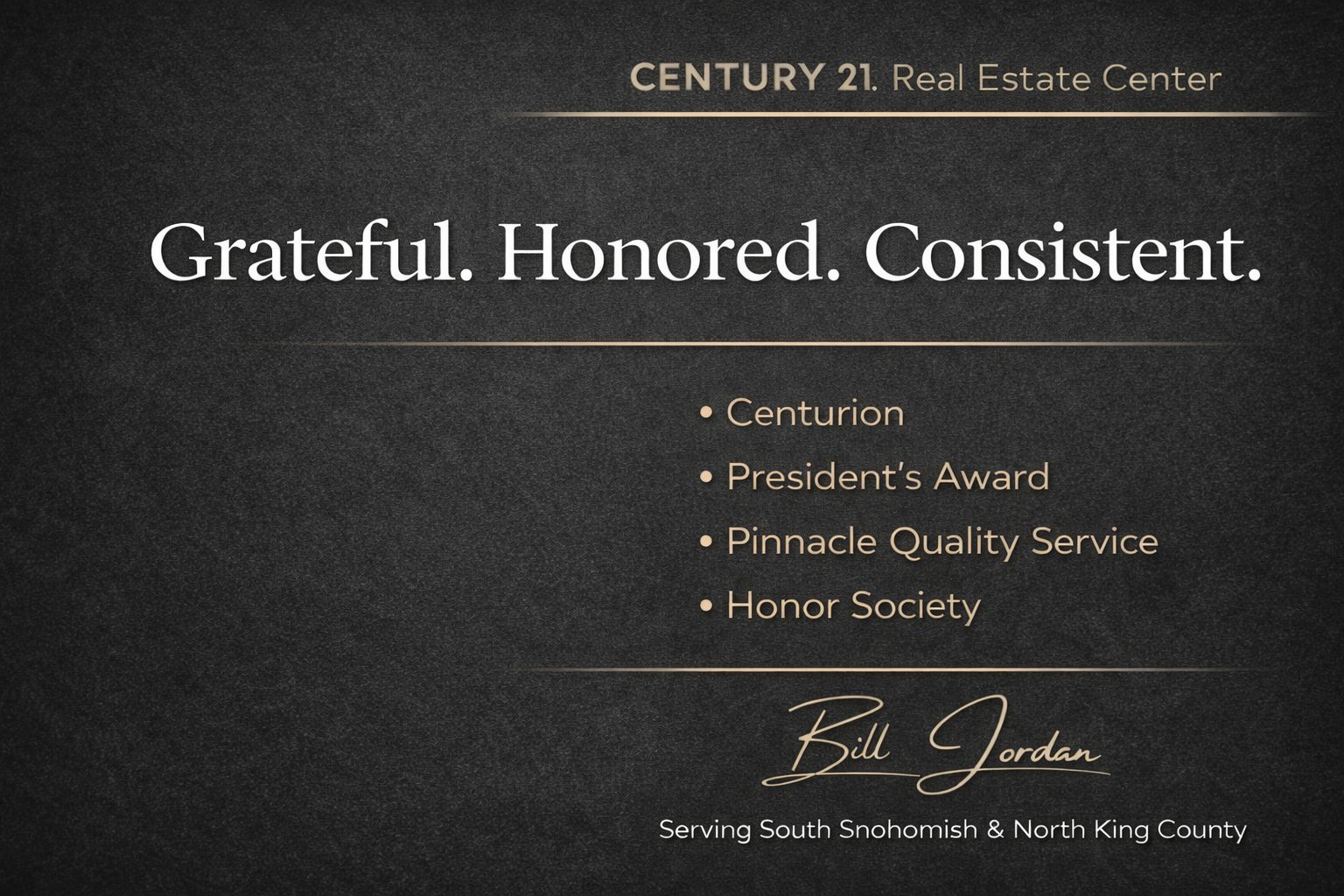
Last weekend, I had the opportunity to attend our CENTURY 21 Real Estate Center annual awards event. I walked away incredibly grateful and proud to have received the following recognitions:
Centurion President’s Award Pinnacle Quality Service Award Centurion Honor Society
First and foremost, these are not “Bill awards.”
They are a reflection of the trust people place in me across South Snohomish and North King County every single year.
But I also know that most consumers have no idea what these awards actually represent. So instead of just posting a photo with a caption, I want to explain what they mean and why they may matter to you.
Centurion Award
The Centurion Award recognizes a high level of closed production within the CENTURY 21 system.
In practical terms, it reflects a significant number of homes successfully bought and sold in one year.
Why this matters to you:
Experience compounds.
Every transaction involves negotiations, inspections, timelines, financing coordination, appraisal, and emotional decisions. The more transactions I successfully navigate, the sharper my instincts become and the more confidently I can protect each client’s position.
This award reflects consistent, high level production in our local market, not just a one off year.
Pinnacle Quality Service Award
This one is especially meaningful.
To even qualify for the Quality Service program:
• At least 80 percent of all transactions must be sent a client satisfaction survey • At least 50 percent of those surveys must be returned
To earn the Pinnacle level, an agent must maintain a minimum 95 percent overall satisfaction score for two consecutive years.
This is not based on hand picked testimonials. It is based on verified survey feedback across the majority of transactions.
Why this matters to you:
High production is important. But high production with verified client satisfaction is what truly counts.
This award reflects consistency in communication, follow through, and overall client experience.
President’s Award
The President’s Award is presented to agents who achieve both:
Centurion level production Pinnacle Quality Service Award
In the same year.
In simple terms:
High volume and high satisfaction at the same time.
It recognizes the balance between performance and client care, which I believe is the foundation of a sustainable real estate business.
Centurion Honor Society
This is absolutely the one I am most proud of.
The Centurion Honor Society recognizes individuals who have achieved Centurion production for a minimum of 5 of the past 7 years.
In my case, I have achieved Centurion level production five years in a row with no gaps. Only THREE agents in the 40 year history of my office have received this, and I am one of them!
Why that matters:
This is not about one strong year. It is about sustained performance through different market cycles.
Over the past several years, we have seen record highs, rapid appreciation, intense competition, rising interest rates, and shifting buyer behavior. Maintaining high level production consistently through all of that speaks to adaptability and staying power.
What This Means for You
If you are buying or selling in Lynnwood, Edmonds, Bothell, Mill Creek, Everett, Mukilteo, Shoreline, or anywhere in South Snohomish and North King County, these awards represent three key things:
Experience Verified client satisfaction Long term consistency
Real estate is one of the largest financial decisions most people will ever make. My commitment is to combine strong negotiation and production with a client experience that earns repeat business and referrals year after year.
I am incredibly grateful to my clients, referral partners, and community for trusting me with that responsibility.
If you are considering buying, selling, or simply want to understand your home’s value in today’s market, I would be honored to help.
Inventory pulled back this week with fewer new listings hitting the market compared to the week prior. At the same time, pending activity ticked up, which tells us buyers are still very active and writing offers.
Closed sales dipped slightly, which is normal as we move through seasonal shifts and contract timing cycles. What stands out most is the jump in price reductions. Seventy homes reduced their price this week, which is a noticeable increase and signals that some sellers may have started too aggressively.
We are seeing a market that is active, but sensitive to pricing.
What This Means for You
Buyers
More homes are going under contract even with fewer new listings coming on. That means competition still exists, especially for well priced homes in strong locations.
The increase in price reductions creates opportunity. If a home has been sitting for a few weeks or recently reduced, there may be room for negotiation. Strategic timing matters right now.
Sellers
Pending numbers rising is good news. Buyers are out there.
However, the spike in price reductions is your warning sign. The market is not forgiving on overpricing. Homes that come out strong and aligned with current buyer expectations are the ones that move quickly and avoid chasing the market down with reductions.
If you are thinking about selling this spring in Lynnwood, Edmonds, Bothell, Mill Creek, Everett, Shoreline or surrounding areas, preparation and pricing strategy will make all the difference.
If you want to talk through your home’s position in today’s market, I am always happy to run the numbers and give you a clear plan.
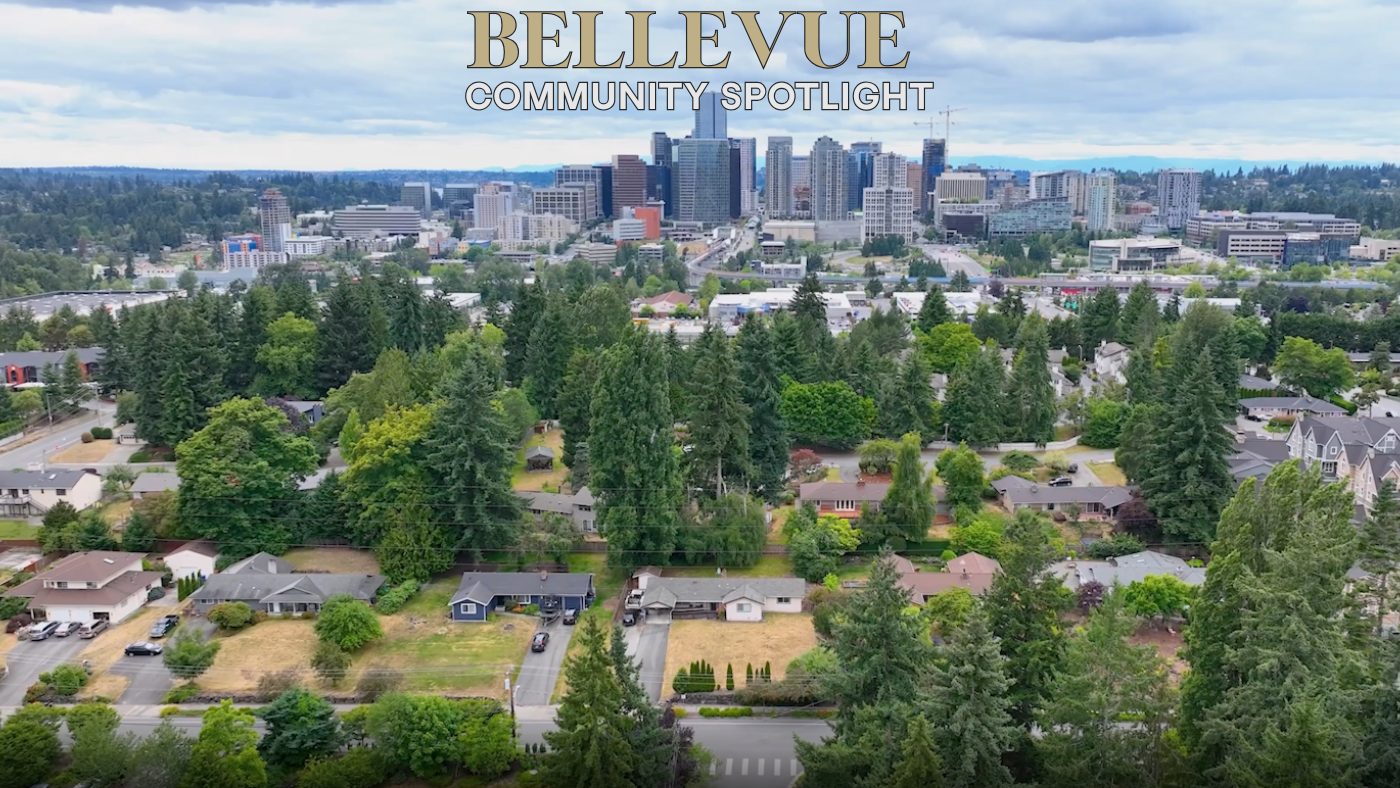
If you’re looking for a city that blends luxury living, career opportunity, and everyday convenience, Bellevue continues to stand out as one of the most sought after markets in the Pacific Northwest.
Located just east of Seattle across Lake Washington, Bellevue has evolved into a true urban powerhouse while still offering quiet residential neighborhoods, lakefront estates, and walkable downtown living.
Let’s break it down.
📊 Bellevue Real Estate Market Snapshot
Here’s what the numbers look like right now:
Residential Average home price: Nearly $2.3 million
Condominiums Average condo price: About $895,000
Townhomes Average townhome price: Around $970,000
These price points reflect Bellevue’s strong demand, high income job base, and limited inventory in many desirable neighborhoods.
💼 Why So Many Buyers Target Bellevue
Bellevue is a major employment hub on the Eastside. Companies like Microsoft, Amazon, and T-Mobile have a significant presence here, along with numerous tech startups and global firms.
That strong employment base helps support higher price points and keeps demand steady even when other markets cool.
🏙️ Neighborhood & Lifestyle Appeal
Bellevue offers a wide range of living options:
Downtown high rise condos with walkability to dining and shopping Luxury estates in West Bellevue Waterfront properties along Lake Washington Established neighborhoods with tree lined streets Newer townhome communities close to light rail and tech campuses
Bellevue Downtown Park is one of the city’s crown jewels, offering 20 acres of green space right in the urban core. The shopping and dining at The Bellevue Collection adds to the upscale, walkable lifestyle.
📈 What This Means for Buyers and Sellers
Buyers Bellevue is competitive, especially under $1 million in the condo and townhome space. Strategic offer writing, strong financing, and knowing the micro markets matter here.
Sellers With an average residential price near $2.3M, proper positioning and marketing are critical. Presentation, pricing strategy, and high level exposure can make a significant difference in final sale price.
Thinking About Bellevue?
Whether you’re relocating for work, downsizing into a downtown condo, or exploring luxury neighborhoods, Bellevue offers long term stability and strong appreciation potential.
If you’d like to see what your home could sell for in today’s Bellevue market or explore current listings HERE, I’m happy to help.
That often means you may not make payments on the assistance portion until you sell or refinance the home.
The goal is simple. Make homeownership more accessible without requiring a massive amount of cash up front.
How Much Assistance Is Available?
Depending on the program and loan type, buyers may qualify for:
• Help with down payment • Help with closing costs • Assistance based on a percentage of the purchase price
For example, if someone is purchasing around $650,000 in parts of Snohomish County, even a 5% down payment is $32,500. That is before closing costs.
For many households, income is not the issue. The savings timeline is.
That is where assistance programs can become a powerful tool.
Who Qualifies?
Each program has specific guidelines, but generally these programs are designed for:
• First time buyers • Buyers within certain income limits • Buyers using specific loan programs • Buyers who complete a required homebuyer education course
And here is something that surprises people:
First time buyer does not always mean you have never owned. It often means you have not owned in the last three years.
Many people assume they would not qualify when they actually might.
Is This Free Money?
This is where clarity matters.
Most programs are not free money. They are structured assistance loans.
That means:
• They are typically repaid when you sell • They may be repaid when you refinance • They may carry low or deferred interest
But if using assistance allows you to buy sooner and begin building equity instead of continuing to rent, the long term math can absolutely make sense.
Every situation is different. That is why a real conversation with a knowledgeable lender matters.
What This Means Locally
In today’s market across South Snohomish and North King County, many buyers can afford the monthly payment.
What holds them back is the upfront cash.
If down payment assistance shortens your savings timeline by years, that changes the conversation entirely.
The key is not assuming you do or do not qualify.
It is running the numbers.
The Smart First Step
There is no cost and no obligation to talk with a lender and see where you stand.
Even if you are 12 to 24 months out. Even if you think your income may be too high. Even if you assume you will not qualify.
The worst case scenario is you walk away with a clear plan.
The best case scenario is you realize you are closer than you thought.
Want to Explore the Details?
For full program guidelines and the most current information, you can review the official Washington down payment assistance resources here:
If you would like to talk through whether this could work for you in our local market, I am happy to connect you with a trusted local lender and help you map out the next steps.
New Listings: 168 ⬆️ (135) Pending Sales: 165 ⬇️ (178) Sold Homes: 112 ⬆️ (87) Price Reductions: 54 ⬇️ (61)
Weekly Trend Overview
Inventory jumped this week with 33 more homes hitting the market compared to last week. That is a noticeable increase and gives buyers more options to look at.
Pending activity dipped slightly, but not dramatically. Even with more listings available, buyers are still writing offers at a healthy pace.
Closed sales had a strong bump, which tells us contracts from previous weeks are continuing to convert and move through to closing.
Price reductions declined, which suggests sellers are positioning homes more accurately from the start or that buyer demand is absorbing new inventory without as much resistance.
Overall, this feels like a more balanced and active February market across South Snohomish and North King County.
What This Means for You
Buyers
You finally have more choices. That is good news.
With new listings rising, you may see less intense competition on certain homes. That said, well priced homes are still moving. The drop in pendings is not dramatic enough to signal a slowdown. If you see the right home, hesitation can still cost you.
This is a great time to be watching the market closely and ready to act.
Sellers
Inventory rising means competition is increasing.
The good news is sold numbers are up and price reductions are down. That tells me buyers are still motivated and homes are still closing. But pricing strategy matters more now than it did when inventory was tighter.
Preparation, presentation, and pricing are everything in this type of market shift.


 Facebook
 X
X
 Pinterest
 Copy Link